


Why does my hip pain keep coming back?
Why does my hip pain keep coming back?
A client, I’ll call her Sally, (not her real name) told me last week that her physio had moved her hip around and, for the first time in ages, it didn’t hurt.
Brilliant!
But even the physio said the pain would probably come back.
And this is where my approach comes in.
Relieving pain doesn’t automatically change what’s causing the problem in the first place.
Let's first ask, "Why is your hip struggling?"
I want to understand why that part of the body is under so much pressure.
How is it being used day to day? Is it doing more work than it needs to?
And if it is, why?
That’s what I wanted to explore with Sally.
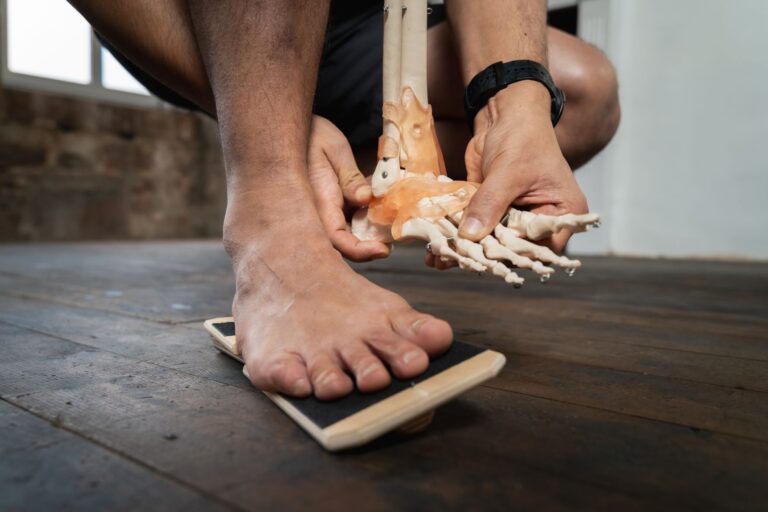
You see a bend forward - I see 20 things before you even start
We looked at how she stood, hinged forwards and moved, and something became clear.
As a movement specialist, spotting patterns is one of my strengths. I could clearly see her left leg was doing far more of the work, carrying much more of her weight than the right.
But she couldn’t feel the difference.
My job is to make sure the client understands what’s happening in their own body. So I needed to make it clear.
I asked her to get up from a chair, leading with her left, then her right.
Now she could clearly see the difference. She was unable to generate the support and drive she needed to stand on the right. Light bulb moment!
Then I noticed how she stood when she wasn’t thinking about it. Almost all her weight was shifted onto her left leg, knee locked tight, with her right foot barely touching the floor.
So now the issue was much clearer.
How pain is built
Sally was repeatedly putting far more weight and demand through her left leg than her right.
When one area of your body is constantly being asked to do more than its fair share, that extra strain can eventually lead to discomfort, pain and injury.
And Sally was doing this day after day, without even realising it.
Is her left leg simply compensating for a problem with her right?
It’s tempting to think so, particularly as she’s had previous problems on the right.
But it’s not that simple.
The automatic movement habits we develop can affect both sides of our body, creating different demands and limitations. And because these habits feel normal, we often don’t realise we’re doing them.
You might think the answer is simply to get her standing on her right leg more.
But what if the right leg doesn't yet know how to support her properly?
That’s what we’re working on changing.
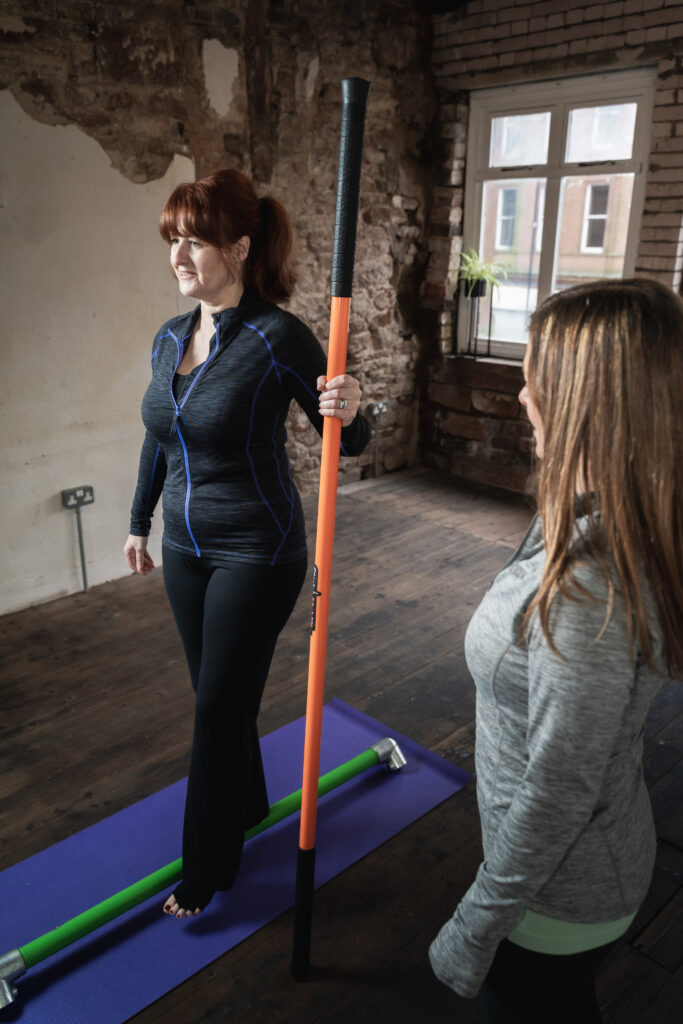
We’re exploring how her feet, legs, pelvis and trunk work together to create support. So she can use her right leg more effectively and transfer weight between both legs when she walks.
Telling someone to move differently is one thing. Helping their body learn how to do it is another.
That takes practice and progression. We develop skills through simpler movements, then gradually bring them into squats, lunges, hinges and the activities she wants to do.
What happens if we only keep treating the painful hip?
Imagine she continues having her hip loosened every few weeks.
It feels better. She can walk and exercise with less discomfort.
That’s valuable.
But when she returns to everyday life, she’s still habitually loading her left leg far more than her right.
The same physical demands are still there.
Perhaps her hip starts complaining again. Or perhaps she begins experiencing discomfort elsewhere. Her knee, lower back or another area working harder as part of that movement strategy.
If you only investigate where you feel pain then you can’t resolve the wider reasons for that pain.

Why strengthening alone won't fix the issue
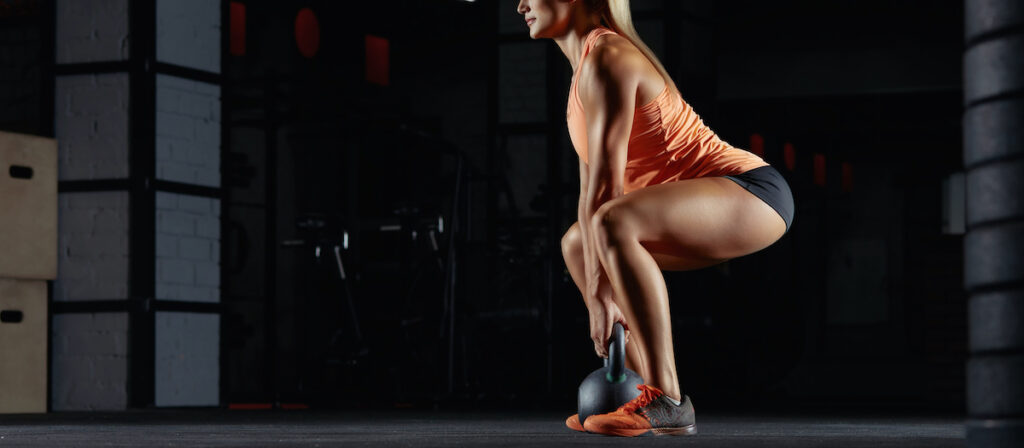
She could develop stronger muscles and still spend most of her day relying on her left leg.
Having stronger muscles doesn’t automatically mean you’ve learnt how to use them differently.
Our work is about developing support, usable strength and movement skills that allow her to share the load more effectively between both sides, eventually without having to consciously think about every movement.
You can influence much more than you think
If you keep experiencing pain or injuries, there may not be one neat cause. But that doesn’t mean you can’t change it.
And if you’ve experienced pain in different parts of your body, don’t assume they’re separate problems. How you use one part of your body affects what happens elsewhere.
That’s why looking at the whole body matters.
I want you to know, treatment can help you relieve pain. But nobody can change the way you habitually use your body for you.
Strengthening and stretching can be useful. But they’re only part of what determines how you move.
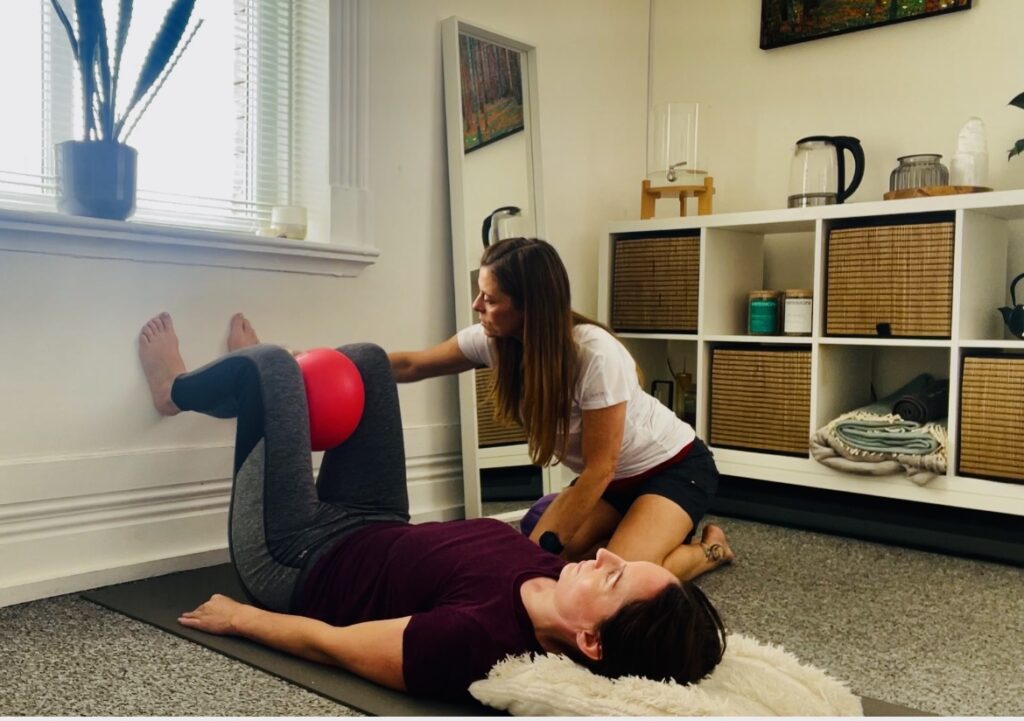
Why work with an injury specialist movement coach?
Changing movement habits takes awareness, practice and learning new skills.
But when those habits feel completely normal, how do you even know what needs to change?
That’s where I can help. I look for the patterns you can’t necessarily see or feel yourself, then help you develop new movement skills and put them into practice in everyday life and the activities you love.
You don’t have to work it all out alone. But you do need to be part of the process.
.

How can you build a body you can trust?
A body you can trust doesn’t mean you’ll never experience pain or injury again. No one can promise you that.
But you can learn to recognise early warning signs, make adjustments and build a body that’s not just stronger, but better able to cope with the demands of everyday life, exercise and the activities you love.
Because feeling better matters. But so does changing what keeps bringing you back to the same problem.
Fed up with the same pain or injury returning?
I’m Julie, a movement coach specialising in back pain and sports injuries, based in Bromley Cross, Bolton.
If you’re regularly needing treatment, or still struggling to do the things you love, my free 30-minute Pain & Injury Call is a chance to explore what’s happening, what you’ve tried and what might be missing.
