Build a body you can trust
Movement & nervous system coaching
For active people tired of recurring aches and pains and not willing to accept its "just age"
You’re doing a lot right.
So why do things still keep flaring up?
It’s not like you are not trying:
- Training regularly
- Stretching
- Yoga
- Strength work
- Researching
- Seeing a physio
Because staying active matters to you. You want to stay fit, strong and capable.
And to have a body that keeps up with the life you want to live.
But life is busy. Demanding.
- You push through.
- Never quite switch off.
- Keep going until your body forces you to rest.
One week things feel fine, the next something flares. You modify training or stop altogether.
Either way, the experience is the same. Your body starts to feel unreliable.
And you end up stuck with recurring aches and pains,or niggles that move around your body.
It's not your age.
It’s easy to assume recurring injuries are simply part of getting older.
But pain is often the final signal, not where the problem actually began.
By the time something hurts, your body has usually been compensating for a while.
You might feel it as a tight hamstring, a sore knee or a painful back.
But the real issue is often coming from somewhere else entirely. When the body has to work around restrictions, it finds ways to keep you moving.
That works for a while.
Eventually those compensations begin to overload other areas.
That’s why it feels unpredictable.
One issue settles, then something else appears a few months later.
"I feel stronger, move better and have less pain"
“I’ve had family members encourage me to give up. Told I’d always have a bad back and be in pain - but I’m so glad I didn’t listen.
I feel stronger, move better, and have less pain than I’ve had in years. My consultant said whatever you are doing - carry on!"

Anne 121 Client Bury
Why recurring injuries keep coming back
Most people try to solve these problems by adding more tools.
- Hip flexor stretch
- Glute work
- foam rolling
- yoga, pilates
Those things can help temporarily.
But if the underlying pattern hasn’t changed, the same problems tend to appear again later, sometimes in a completely different place.
Sometimes the thing that hurts isn’t the real problem.
It’s where the body finally ran out of options.
What actually changes things is understanding why your body keeps running into trouble and working through the right steps to correct it.
What actually changes things
- Learn to create change without fighting or forcing your body
- Build movement that prevents pain not create it
- Understand how daily life affects the way your body feels, moves and responds
- Build daily habits that reduce the hidden cost of exercise, stress and busy lives
- Develop strength that works with your body, not against it
When those pieces start working together, something important changes.
Your body stops feeling unpredictable.
Training becomes more consistent.
And you can start building momentum again.
What working together looks like
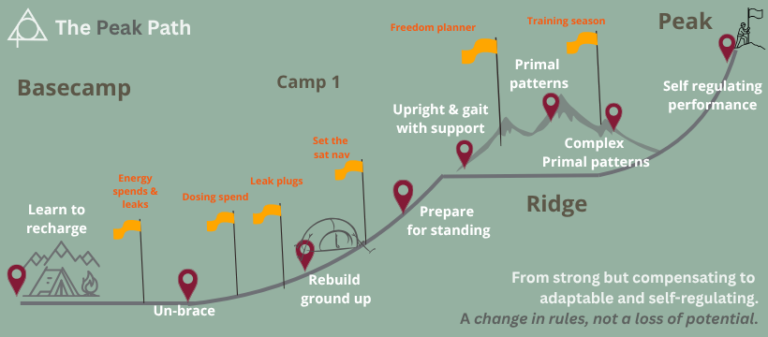
Your plan, although tailored to you, follows a clear phased process called The Peak Path.
It’s the framework I now use with all clients, developed through years of coaching and observing how bodies actually create change that lasts.
The aim is simple: to help you understand your body and become more self-sufficient, so you can manage training, recovery and load more effectively day to day.
The work moves through three stages:
Basecamp → Ridge → Peak
Each stage rebuilds the pieces your body needs to move well again.
As those foundations return, pain settles, training becomes more consistent and confidence in your body grows.
Step 1 - Find the cause
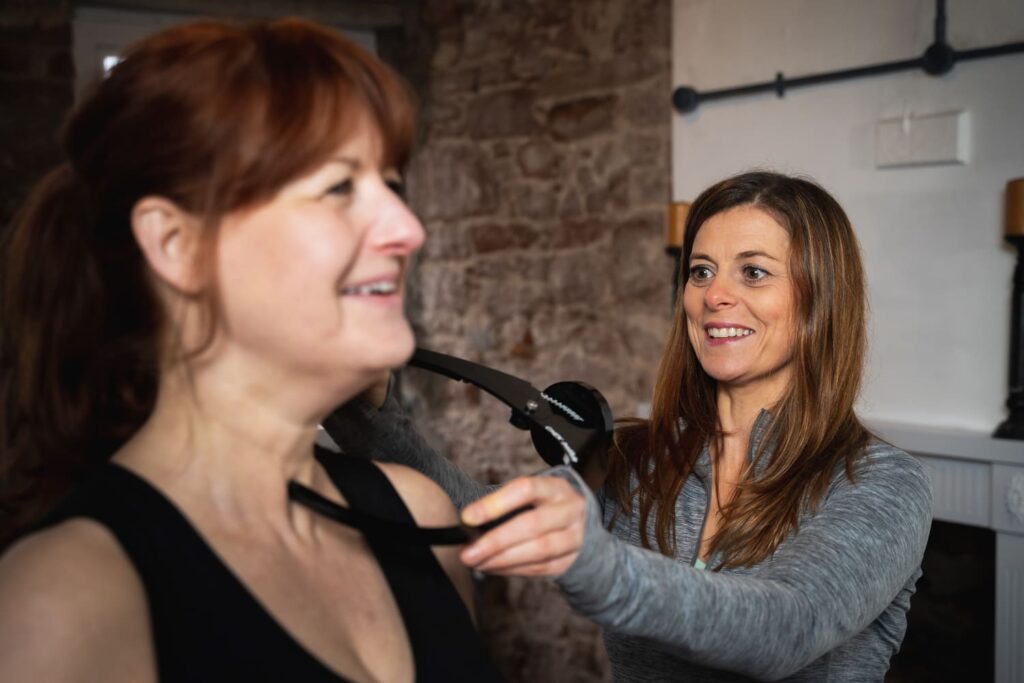
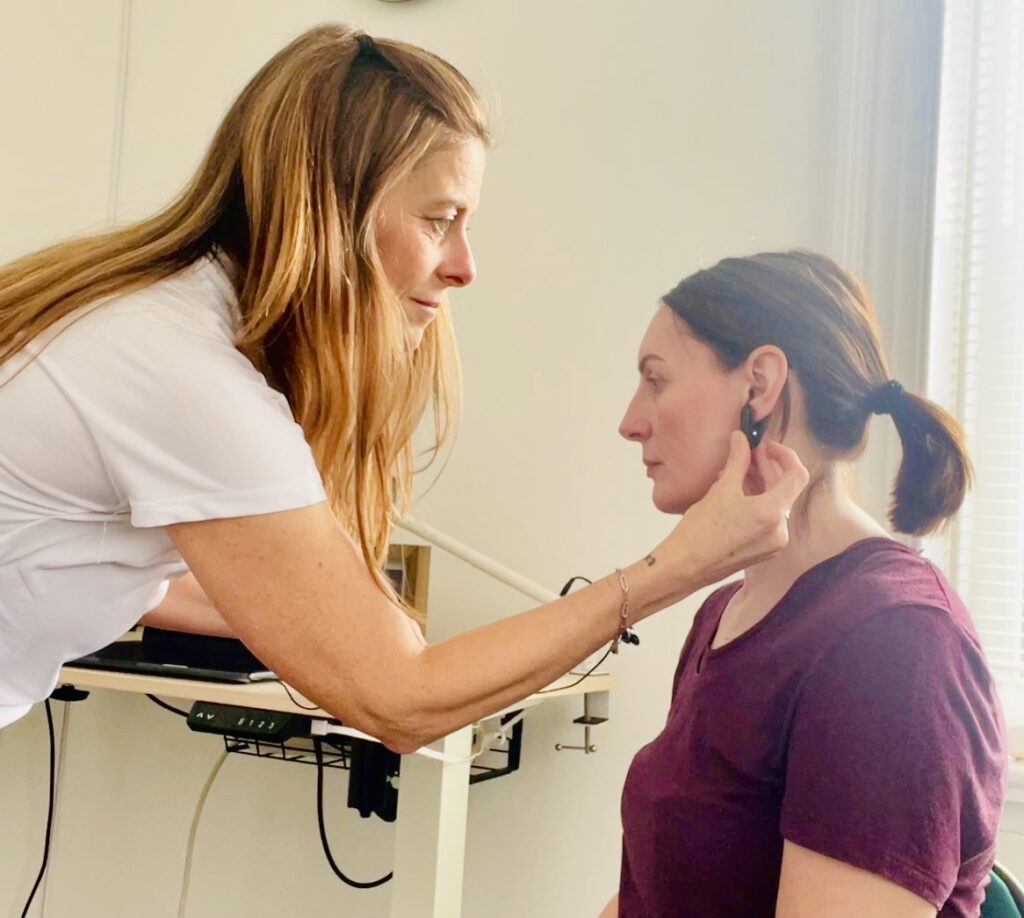
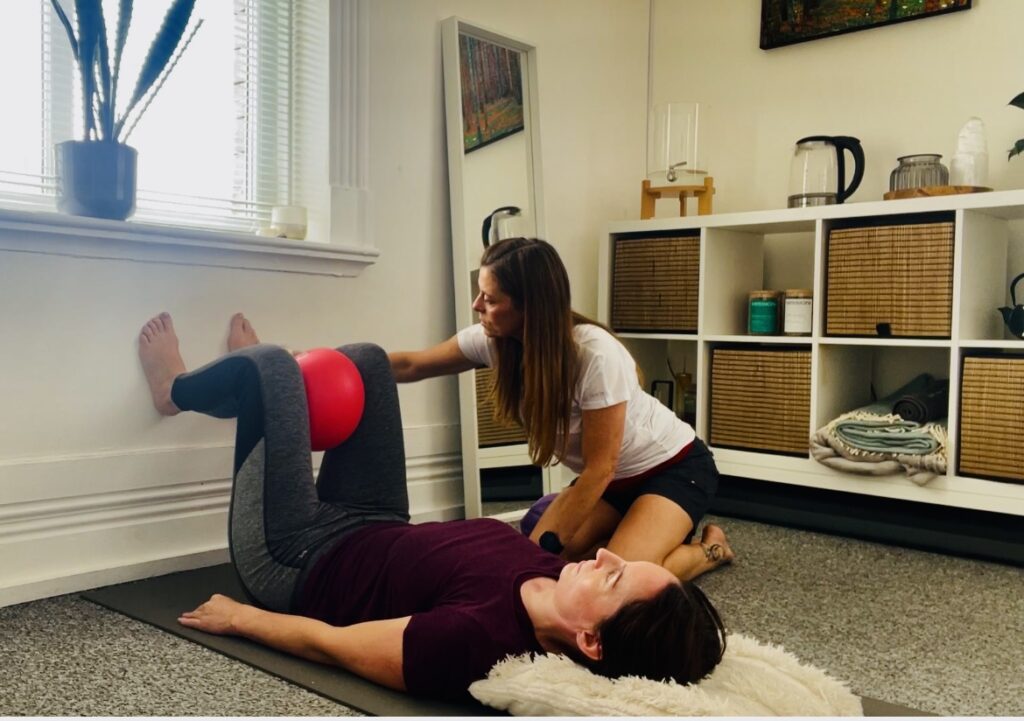
We start with our signature assessment, your full body MOT.
This 90 minute assessment uses a range of tools to understand how your body is currently working and why problems keep showing up.
We look at:
- Your posture
- How you breathe
- Your movement patterns
- How your muscles organise
- Your nervous system function and patterns
- The demands your body is under from training and life
Most people arrive thinking the problem is the sore knee, tight hamstring or painful back.
Your MOT will show you how those are simply the place where the system finally ran out of options. It will make it clear what’s really driving the stop-start cycle of pain, niggles or recurring injuries.
We build your plan using the detailed information in this step.
Step 2 - Rebuild how your body works
Basecamp - where you rebuild foundations
This phase creates the foundations for change that actually sticks.
It gives your body the stability and organisation it needs so training can start working with your body again rather than against it.
This is where flare-ups start to reduce.
You understand what your body is doing and how to respond earlier, before small problems turn into bigger ones.
Why stretching and strengthening haven’t worked
Stretching or massage can ease tension and loosen tight areas.
But if a muscle is overworking because of the way your body is moving, it tightens up again. Because the reason it is working so hard has not changed.
Strength work is similar.
You can strengthen muscles in the gym, but that does not always mean your body accesses that strength properly when you move.
The goal is not just to loosen or strengthen parts of your body.
It is to help your body move and respond to life and training differently, so it no longer falls back into the same tension and compensation patterns.
This is the step most training plans miss
Without that skill the system simply falls back into the same compensation patterns again.
Rebuilding co-ordinated patterns
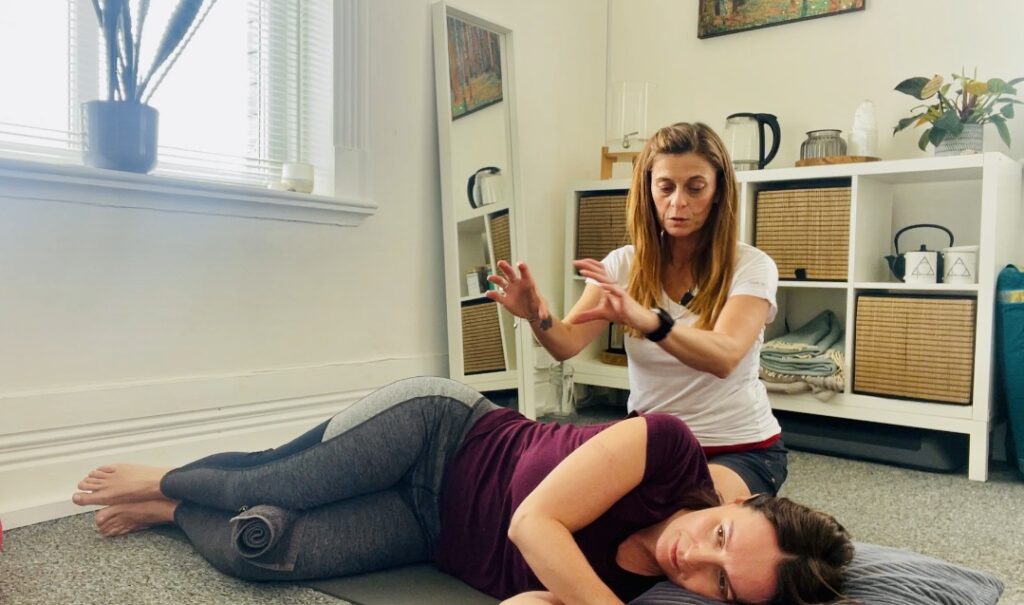
Alongside this work, we start rebuilding the movement patterns your body needs to move without regular pain or uneven strain.
Walking and running should feel balanced between both sides of the body.
Your weight shifting cleanly from one side to the other, with rotation of the torso, pelvis, leg and foot working together.
When that co-ordination is missing, that’s when people commonly notice:
- one hip tighter
- one hamstring always sore
- one knee taking more strain.
Most approaches try to solve this by strengthening individual muscles.
But the body doesn’t move muscle by muscle.
So instead of only training muscles, we restore the patterns, how the body works as a whole system.
That way, strength training becomes far more effective and the body stops relying on the same compensations.
Cenys 121 Client
“The more I come to see you, the more I realise there are ways to reset your body and nervous system that really make a difference - and we’re just not told this stuff… it’s so important.”
Ridge - Where we build strength
Once the foundations are in place, strength work can begin.
In Ridge we start rebuilding the movement patterns your body uses in everyday life and training:
standing, stepping, hinging, squatting, pushing and pulling.
But now the body is not relying on the same tension, bracing and compensation patterns underneath.
Training starts to feel different.
- Movement feels smoother.
- Strength feels more natural and less forced.
- You understand how to recover well
Your body becomes more capable of handling the demands of life, exercise and adventure without constantly flaring up or breaking down.
Peak - Where you build for bigger challenges
Once the foundations and movement patterns are in place, the body is ready for greater challenge.
In Peak the focus shifts toward building the strength, endurance and resilience needed for the things that matter to you. That might mean
- running further or faster
- tackling mountains
- training for an event you have been thinking about for years
- or simply enjoying consistent training without worrying that something will flare up again.
It may take longer than jumping straight into another training plan.
But this time your body is no longer relying on the same tension and compensation patterns underneath.
- Training starts building you up instead of constantly tipping you back into setbacks.
- You are no longer stuck endlessly managing your body.
- You are free to focus on the adventures, challenges and active life that matter to you.
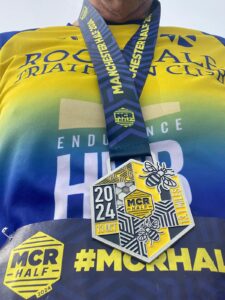
"I’ve hit my 10K goal, done a half marathon, and I’m closing in on my half ironman."
Andy, 121 client, Ramsbottom
“I was ready to burn my running shoes and give up.”
Ongoing pain and injury had me thinking I was done. But now my plantar fasciitis is completely gone, no more foot pain or back pain.
I’ve hit my 10K goal, completed a half marathon, and now I’m closing in on a half Ironman.
I use everything you taught me and it’s paying off.”
Who this approach is for
Who this is for
This work is for people who want to stay active, capable and live a full, adventurous life long term.
- You’ve had to reduce or stop activities you love because something keeps flaring up
- Training feels unpredictable - one week things are fine, the next something hurts
- You’ve tried stretching, strength work or physio but the same problems keep returning
- You don’t want to stop being active. You want a body that can keep up with the life you want to live.
- You’re willing to understand your body and rebuild it properly, not just chase quick fixes
This is for you if you want a body that keeps getting better.
More reliable.
More efficient.
More capable over time.
So you can start understanding how to work with it
instead of constantly guessing or chasing fixes.
Who this isn't for
This approach may not be the right fit if:
- You’re looking for a quick fix to get rid of pain
- You simply want a list of exercises to follow without understanding how your body works
- You want immediate performance gains and aren’t interested in rebuilding the foundations that allow training to last
- You’re not interested in learning how to manage your body and training for the long term
This work takes a little more patience than jumping straight into a training plan.
But the goal isn’t just to get you back to where you were. It’s to build a stronger, more resilient body. But also give you the understanding to challenge it in ways that keep you progressing rather than constantly breaking down.
The Peak Path
3 steps to work with us
1 Book a short Call
We start with a short conversation.
You tell me what’s been going on, what you’ve tried, and what you’d like to get back to doing.
If it feels like a good fit, we plan the next step, booking your MOT.
2 Start with an MOT
This is a full assessment of how your body is working right now.
We look at breathing, movement patterns, posture, structure and nervous system patterns.
It helps us understand why the issue keeps returning and what needs to change.
You leave with a clear picture of what’s really driving the problem.
MOT sessions take place in Bromley Cross, Bolton, or can be done remotely if you’re further away.
3 Begin coaching
From there we begin coaching using the Peak Path framework.
Most people work with me over several months, with coaching plans typically running from around four months through to twelve months or longer depending on your goals.
The process moves through Basecamp, Ridge and eventually Peak, helping you rebuild a body that is stronger, more resilient and capable of handling the challenges you care about.
"The impact on my whole well-being is incredible"
Olly, 1:1 client, Ramsbottom
"I’m approaching my daily routine with a new vigour and sense of calm. I don't hurt anymore! The impact on my whole wellbeing is incredible"
Why this works
Most training plans add more exercises.
- Stretch the tight area.
- Strengthen the weak muscles.
- Push through.
Sometimes that helps temporarily.
But if the body keeps falling back into the same tension and movement patterns, the same problems usually return.
The Peak Path works differently.
First we rebuild the foundations underneath movement and training.
Shifting you from pain-causing patterns to pain-preventing ones.
Hi I'm Julie
I created the Peak Path after years of experiencing the same stop–start injury cycle myself. I realised that the way most people approach training and recovery is missing some key pieces.
and this is Phil
Phil is my partner and works part time in the business. He brings specialist knowledge in foot mechanics, gait training and breath. This powerful trio play an important role in helping people rebuild strong, efficient movement.
Together we help active people move beyond the stop-start cycle and build a body they can trust again.
Real results, real people
Aiden, 1:1 client, Lymm
"Julie helps me get the most from what my body can do."
“Within 3 months, I was going box-to-box like Bellingham again and now I’ve run for 22 minutes and even been skiing. Julie challenges conventional wisdom, keeps me accountable, and shows what’s truly possible.”
“I’ve seen such an improvement that I am thrilled that I have returned to running. I even completed a sprint triathlon for the first time in 6 years.”
Alasdair, Ramsbottom
"It's given me the confidence to get back running which I didn't think I would do again. It's been liberating! Through this process I will end up better than before the pain started. So in a way it was a bit of a wakeup call and will set me up for the future."
Pam, St Helens
"I was ready to burn my running shoes and give up due to ongoing pain and injury. But now my plantar fasciitis is completely gone. No more foot pain or back pain. And I am closing in on my half marathon goal. I use everything you taught me and it pays off"
Steve, Tottington
"This has been life-changing for me and one of the best investments in my health that I have done. I am now free from pain in my hips and have better movement in my spine and whole body, as well as an improvement in mental health"
Nick, Darwen
If this resonates, the first step is a call
Start with a conversation
Most people arrive unsure what the right next step is.
That’s exactly what we figure out together.
On the call we talk through what’s been happening with your body and whether starting with an MOT makes sense.
No pressure. No hard sell.
Just a straightforward conversation.
I’m based in Bromley Cross, Bolton and work with active people across the North West, many of whom come to me after months or years of recurring injuries that keep coming back.
Book a call